
Pregnant at 42 as a Black Woman: Black Motherhood, Celebration, Isolation & Mental Health
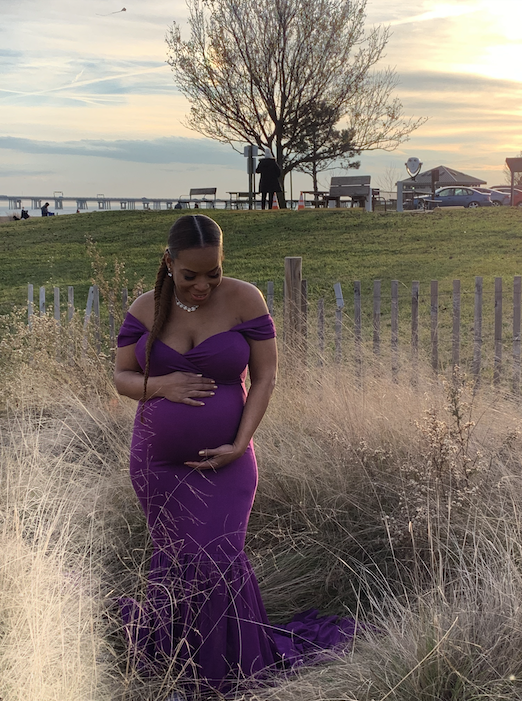
According to the world, I had everything against me.
I was 42. Black. And suddenly, pregnant.
But this story is not only about fear.
It’s also about celebration.
Because even in uncertainty, there was joy. There was gratitude. There was awe in realizing that after years of wondering what motherhood might look like for me, I was finally stepping into it.
I had always envisioned becoming a mother, but as the years passed, that vision started to feel more complicated than I imagined. So like many high-achieving women, I shifted my focus toward what I could control:
My career. My growth. My purpose.
Until one unexpected doctor’s appointment changed everything.
My OB-GYN told me very directly:
“If motherhood is something you want, you need to shift your focus now.”
And just like that, I was on a journey I wasn’t fully prepared for emotionally, mentally, or spiritually.
When “Advanced Maternal Age” Becomes Personal
Let’s talk about the term no one prepares you for:
“Geriatric pregnancy.”
Clinically, it refers to women 35 and older.
Emotionally? It hits differently.
Nothing about me felt fragile. Not my energy, not my lifestyle, not even my mindset. But in a medical setting, I was suddenly categorized as “high risk.”
And labels have power.
You start questioning:
Your body
Your timing
Your decisions
Whether you waited too long
For many women—especially Black women—this isn’t just medical. It’s deeply personal.
At the same time, I was also holding something sacred: the quiet excitement of becoming a mother.
That’s the part people don’t talk about enough. Black motherhood can hold celebration and fear at the same time.
Celebrating While Carrying Fear
There were moments I allowed myself to dream.
Thinking about meeting my child. Imagining the future. Feeling tiny kicks and realized someone was growing inside of me.
There was joy in preparing for motherhood, even when fear tried to interrupt it.
But the celebration looked different from what I imagined.
There were no big gatherings. No traditional moments shared with the community. No full village experience.
Instead, much of this journey happened quietly.
And sometimes, quietly can feel lonely.
Blocking the Noise: Fear, Statistics, and Reality
Very early in my pregnancy journey, I had to learn one thing quickly:
You have to block the noise.
And by noise, I mean:
Statistics telling you your chances are low
Conversations about complications
The rising maternal mortality rates for Black women
Constant reminders of everything that could go wrong
Information is important—but fear can become overwhelming when it’s all you consume.
At some point, I had to ask myself:
What am I going to hold onto? And what am I going to release?
Because I deserved to experience joy too.
Pregnant During a Crisis: Isolation and Emotional Weight
Now layer all of this on top of a global pandemic.
I wasn’t just pregnant. I was pregnant during COVID-19, during social unrest, during a season where the world felt heavy every single day.
There were moments when the emotional weight felt unbearable:
Watching constant news of death and loss
Seeing repeated trauma within the Black community
Feeling isolated from the people I loved
Carrying anxiety while trying to protect my peace
And because I had prayed for this moment, I sometimes felt guilty admitting how hard it was.
So I did what many women do: I held it in.
The Reality No One Talks About
There are parts of pregnancy—especially for Black women navigating motherhood later in life—that people don’t talk about enough.
1. The Emotional Rollercoaster
Pregnancy hormones alone are intense.
Now add:
Fear
Isolation
Uncertainty
Constant overstimulation from the outside world
Some days felt emotionally exhausting.
2. Isolation Hits Different
Pregnancy is often portrayed as deeply communal.
But during this season:
Appointments happened alone
Celebrations became virtual
Family interactions were limited
Milestones felt quieter than expected
Even joyful moments carried loneliness.
3. Missing the “Village”
One of the hardest parts was grieving what I imagined this experience would look like.
I thought there would be more togetherness. More support.More shared joy.
Instead, much of my journey felt private and emotionally isolated.
4. Fear for Your Child
It’s one thing to fear for yourself.
It’s another thing entirely to fear for your unborn child.
Especially as a Black woman navigating a healthcare system where maternal health disparities are very real.
That fear can feel heavy. At times, even crippling.
The Mental Health Reality for Pregnant Black Women
As a clinician, I also understood what was happening beneath the surface.
Research shows:
Anxiety and depression during pregnancy are common
Rates significantly increased during COVID-19
Black women often experience higher levels of stress while receiving less emotional support
Many women suffer silently while trying to appear “strong.”
And strength can sometimes become survival mode.
But motherhood should not require silence.
What Helped Me Cope
I had to become intentional about protecting both my peace and my joy.
1. Curating My Environment
I became selective about:
What I watched
What I listened to
Who I allowed access to my energy
Because energy matters—especially during pregnancy.
2. Creating New Self-Care Routines
Since many of my normal outlets disappeared during the pandemic, I leaned into smaller moments of care:
Walking outside
Resting without guilt
Creating quiet moments for myself
Letting myself slow down
Even small acts of care mattered.
3. Allowing Myself to Celebrate
This became important.
I had to stop waiting for fear to disappear before allowing myself to experience joy.
So I celebrated the little things:
Hearing the heartbeat
Feeling movement
Preparing for motherhood
Imagining life beyond pregnancy
Joy became part of my healing, too.
4. Leaning on My Support System
Even when support looked different, it still mattered.
People checked on me. Prayed for me.Reminded me I didn’t have to carry everything alone.
And those moments mattered more than they probably realized.
5. Giving Myself Grace
Some days felt heavy.
Some days felt beautiful.
And eventually, I learned to stop judging myself for experiencing both.
Holding Both Truths at Once
Here’s what this journey taught me: Black motherhood can hold duality.
You can feel:
Fear and excitement
Gratitude and overwhelm
Celebration and isolation
Strength and vulnerability
All at the same time.
And all of it is valid.
For the Woman Reading This
If you are navigating pregnancy later in life…
If you are carrying both joy and fear…
If you are trying to celebrate while also protecting your mental health…
I want you to know this:
You are not behind. You are not failing. You are not alone.
Your story deserves support. Your emotions deserve space. And your motherhood journey deserves celebration, too.
You Don’t Have to Navigate This Alone
At For Every Mountain Counseling Services®, we specialize in supporting high-achieving Black women through life transitions—including fertility, pregnancy, motherhood, anxiety, and emotional wellness.
You deserve a space where you feel:
Seen
Supported
Safe
Understood
Start Your Healing Journey Today
Virtual therapy available. Insurance accepted.
Book your consultation today and get the support you deserve.
Sources
Centers for Disease Control and Prevention (CDC)https://www.cdc.gov/maternal-mortality/index.html
National Institutes of Health (NIH) – Mental Health During COVID-19https://www.ncbi.nlm.nih.gov/pmc/articles/PMC8079515/
World Health Organization (WHO) – Maternal Mental Healthhttps://www.who.int/news-room/fact-sheets/detail/mental-health-of-women-during-pregnancy-and-after-childbirth
American College of Obstetricians and Gynecologists (ACOG) – Pregnancy After 35https://www.acog.org/womens-health/faqs/having-a-baby-after-age-35